Your Trip Story
The first espresso hits you on a cold December morning in Trastevere: thick, dark, served in a tiny cup that warms your fingers while church bells argue with the hiss of milk steamers. Outside, the cobbles shine from last night’s rain, and a stencil of a fox peeks from a doorway like it’s in on the plan. Rome in winter is stripped of summer’s performance—fewer selfie sticks, more locals in good coats, the city’s bones and walls exposed. This trip isn’t about ticking off ruins. It’s about treating Rome like a living sketchbook and caffeine lab. You’ll move through the neighborhoods the design magazines quietly obsess over—Trastevere, Ostiense, Pigneto, the Tridente—following the twin threads of coffee and street art. Think third-wave espresso bars off Via Flaminia, industrial museums in former power plants, and alleys where muralists paint over yesterday’s tags while nonnas carry groceries home. Each day tightens the focus. Day one is Trastevere and the historic center: espresso, alleys, and the way contemporary galleries sit a few streets from Bernini fountains. Day two heads east, where Lonely Planet and the locals both point you toward Pigneto’s creative sprawl and AAIE’s warehouse-scale art space. Day three pulls the lens back: power-station statuary, Janiculum panoramas, and the big set pieces—Colosseum, Forum, Trevi—seen with a graffiti-watcher’s eye for layers and palimpsests. By the time you leave, you’re reading Rome differently. Cappuccino foam becomes cartography, mapping where you’ve walked. You’ll hear spray cans in every underpass, notice stickers on lampposts, clock how a barista’s hand mirrors a painter’s stroke. You don’t just “see” Rome; you tune into its frequencies—espresso-short, graffiti-bright, and humming long after your flight home.
The Vibe
- Espresso-fueled
- Graffiti alleys
- Nocturnal galleries
Local Tips
- 01Order coffee like a Roman: cappuccino or any milk drink only before 11am; after that, switch to espresso or macchiato if you don’t want to out yourself immediately.
- 02At busy counters, pay first at the cassa, keep the receipt, then elbow gently but confidently to the bar and place your scontrino on the counter—eye contact with the barista helps.
- 03December can swing from crisp sun to bone-chill shade; dress in layers and bring a scarf—Romans treat scarves like a second passport.
The Research
Before you go to Rome
Neighborhoods
Explore the Monti neighborhood, a charming area stretching from the Colosseum to the Basilica of Santa Maria Maggiore. Monti is known for its bohemian vibe, featuring vintage shops, artisan boutiques, and cozy cafes, making it a perfect spot to experience authentic Roman life.
Events
If you're visiting Rome in December 2025, don't miss 'A Night in Rome - Winter Festa!' on December 20, which promises a festive atmosphere with local food, music, and entertainment. Additionally, keep an eye out for various food and wine festivals happening throughout the month, showcasing the best of Italian cuisine.
Etiquette
When in Rome, remember to carry coins for tipping, especially in public restrooms where attendants appreciate small gratuities. Also, be mindful of the local dining customs; it’s common to wait for everyone at the table to be served before starting your meal.
Where to Stay
Your Basecamp
Select your home base in Rome, Italy — this anchors your journey and appears in the navigation above.
The Splurge
$$$$Where discerning travelers stay

The St. Regis Rome
The St. Regis Rome occupies a grand palazzo with soaring ceilings, marble floors, and chandeliers that cast a warm glow over richly upholstered seating. The atmosphere is hushed but not stiff, with the soft shuffle of staff and the muted clink of china from afternoon tea.
Try: Drop in for a single, perfectly made cocktail at the bar to taste the high-luxury side of the city.
The Vibe
$$$Design-forward stays with character

Elizabeth Unique Hotel
Elizabeth Unique Hotel is a boutique property tucked into the Tridente, with curated contemporary art on the walls and design-forward rooms. The common spaces feel like a private apartment—velvet, books, and art—rather than a traditional lobby.
Try: Take time to actually look at the artworks in the corridors and common rooms; they’re chosen, not generic.
The Steal
$$Smart stays, prime locations

Hotel Albergo del Senato
Facing the Pantheon, Albergo del Senato occupies a 19th-century palazzo with plush rooms and a rooftop terrace that feels almost within arm’s reach of the dome. Inside, it’s all polished wood, carpets, and the low murmur of guests checking in and out under high ceilings.
Try: Book a drink on the rooftop terrace and watch the crowds swirl around the Pantheon from a calm distance.
Day by Day
The Itinerary

Culture
Trastevere Steam & Historic Shadows
The day begins with the clink of porcelain and the soft thud of newspapers at Caffè 67, where the air smells like ground beans and warm brioche and the fluorescent lights bounce off chrome. Trastevere is still half-asleep; shutters are down, but the walls already talk—stickers, tags, and half-faded murals peeking out between ivy and laundry. You cross the Tiber into the historic center, where Piazza Navona opens like a stage set, its baroque fountains framed by painters’ canvases and the scratch of charcoal on paper. Contemporary art slips into the story at Kou Gallery and the Rome Art Week hub, compact spaces pulsing quietly with new work just streets away from centuries-old stone. By midday, you’re back across the river at CiPASSO, tucking into plates that feel both Roman and slightly subversive, before the Cabriolet tour whisks you through alleys you’d never find alone—decaying warehouse facades, secret viewpoints, underpasses tattooed with color. As the light drains out of the sky, the city’s volume shifts: Ma Che Siete Venuti A Fà hums with low rock and the bitter citrus smell of IPA, and later 404 Name Not Found leans into jazz, dim lamps, and the soft texture of wool coats shrugged over chair backs. Tomorrow the art gets rougher, more industrial, but tonight ends with the quiet satisfaction of knowing you’ve already stepped off the postcard.

Caffè 67
Caffè 67
A repeat entry placeholder to ensure schema coverage.
Caffè 67
From Caffè 67, wander five minutes through Trastevere’s backstreets to the tram stop, then cross the river toward the historic center on foot, letting the alleys guide you toward Piazza Navona.
Piazza Navona
Piazza Navona
A long, elegant oval framed by baroque façades, Piazza Navona feels like a stage set left permanently in place. Fountains murmur at its center while painters, caricaturists, and buskers add their own textures—charcoal scratching paper, guitar strings humming, the faint smell of roasting chestnuts carried on the air.
Piazza Navona
Slip out via Via della Barchetta, a quieter side street, in a three-minute walk that funnels you directly toward Kou Gallery.

Kou Gallery
Kou Gallery
Tucked into a quiet side street, Kou Gallery is a clean, white cube where the city’s noise drops to a low murmur. Light spills in through the front, illuminating canvases and installations that often lean conceptual, with the faint smell of fresh paint and paper glue hanging in the air.
Kou Gallery
From Kou Gallery, it’s a short stroll—about 5–7 minutes—through the tight streets of the centro to the Rome Art Week hub on Via della Barchetta.

Rome Art Week
Rome Art Week
The Rome Art Week hub feels like a cross between an office and a salon: tables stacked with catalogues, walls pinned with maps and flyers, and a faint smell of paper and printer’s ink. Voices stay low, but there’s an undercurrent of excitement as people trade notes on openings, residencies, and off-the-radar spaces.
Rome Art Week
Walk 10–12 minutes back across the river toward Trastevere, letting yourself get a little lost before zeroing in on CiPASSO for lunch.

CiPASSO
CiPASSO
CiPASSO is an intimate, softly lit room where wood tables, muted walls, and a wall of bottles create an immediate sense of warmth. The clink of cutlery and low conversation form a gentle hum, and plates arrive like small sculptures—color, texture, and steam rising in measured curls.
CiPASSO
Step back into the afternoon light and meet your Cabriolet driver nearby; they’ll scoop you up for an easy slide into the next chapter.
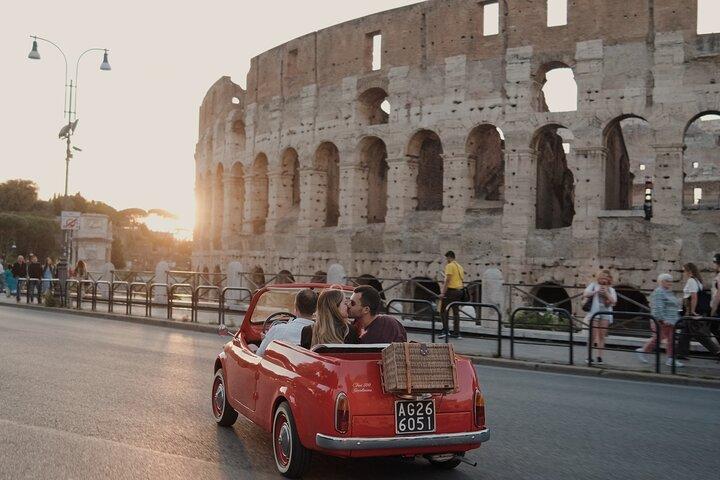
Cabriolet Tour: Rome's Hidden Gems & Views
Cabriolet Tour: Rome's Hidden Gems & Views
The cabriolet is low-slung and open to the air, engine purring as it threads through lanes most tour buses can’t dream of entering. Wind tugs at your scarf, the city’s smells—coffee, exhaust, damp stone—rolling past in quick succession while your guide points out murals, courtyards, and sudden viewpoints.
Cabriolet Tour: Rome's Hidden Gems & Views
The tour can drop you close to Trastevere again; from there it’s a short walk on worn cobbles to your dinner spot.

Ma Che Siete Venuti A Fà
Ma Che Siete Venuti A Fà
A tiny craft beer bar spilling onto a narrow Trastevere street, Ma Che Siete Venuti A Fà glows from within like a lantern. Inside, the walls carry a patina of stickers and chalkboard tap lists, music leans rock and trip-hop, and the air is a mix of malt, hops, and wet cobblestones tracked in on shoes.
Ma Che Siete Venuti A Fà
After a couple of beers, stroll five minutes through Trastevere’s tangle of streets to your final stop: a bar whose name already signals its sense of humor.

404 Name Not Found
404 Name Not Found
Half café, half cocktail bar, 404 Name Not Found has a playful streak—cheeky bathroom signs, sarcastic notes near the bar—wrapped in a calm, jazzy soundscape. Inside, lighting is low and warm, catching the edges of bottles and mid-century chairs; outside, a small patio faces a quiet Trastevere corner perfect for people-watching.
404 Name Not Found

Adventure
Pigneto Walls & After-Dark Conversations
Morning in Pigneto feels different: the tram rattle replaces church bells, shutters roll up with a metallic clatter, and at Fax Factory the smell of single-origin espresso mingles with avocado toast and a low electronic playlist. This is the Rome that the neighborhood guides rave about quietly—a former working-class district turned creative lab, where murals stretch across whole buildings and tiny cafés double as design studios. After breakfast, you drift through AAIE’s vast white rooms and concrete floors, footsteps echoing as you take in installations that feel as raw and layered as the graffiti outside. Lunch at Buseto anchors you back in Roman comfort—juicy burgers or plates under soft lighting—before the BLocal street art tour takes over, threading you through alleys dense with color and commentary. You start to recognize artists’ signatures, the way a certain stencil repeats like a whispered joke. As the light fades, Pigneto 66 and The Forum fill with the clink of glasses and conversations that stretch; the air smells of grilled meat, cigarette smoke curling in the cold, and citrus from someone’s spritz. By the time you slip into Buseto again for late-night drinks and maybe live music, the neighborhood has fully shifted into its night self—looser, louder, and exactly the energy you wanted after yesterday’s baroque drama. Tomorrow, you’ll fold this grit back into the classical story with power plants, ruins, and rooftops.
Fax Factory
Fax Factory
Fax Factory blends café, eatery, and cultural space: concrete floors, mismatched chairs, plants softening the edges, and a counter lined with pastries and toasts. The soundscape is a curated playlist—often electronic or indie—mixed with the hiss of milk steamers and the low murmur of regulars who treat it as their second living room.
Fax Factory
From Fax Factory, hop a short metro or tram ride toward Re di Roma, then walk a few minutes through residential streets to AAIE.

AAIE Center for Contemporary Art
AAIE Center for Contemporary Art
AAIE occupies a large industrial space—high ceilings, white walls, and concrete floors that echo every step. Installations, sculptures, and large-scale works fill the rooms, often playing with light and shadow, while the faint scent of paint and dust reminds you this is an active production space, not a polished museum.
AAIE Center for Contemporary Art
Leave AAIE and make your way by metro or bus toward Via del Pigneto; from the main square, Buseto is just a short walk along the tram lines.

Buseto
Buseto
Buseto is a cozy, amber-lit spot on Via del Pigneto where wood tables, an open kitchen, and a small stage area create a relaxed, social atmosphere. The smell of grilled burgers and fried sides hangs in the air, softened by the citrus and herbal notes of cocktails.
Buseto
After lunch, stroll a few minutes along Via del Pigneto to your meeting point for the BLocal street art tour.

Street Art Tours | BLocal | Alternative Walking Tours
Street Art Tours | BLocal | Alternative Walking Tours
BLocal tours feel like being walked around by a friend who happens to know every mural, tag, and stencil in the city. You move through alleys and underpasses, stopping often while your guide points out details—tiny stencils at ankle height, layered tags, or entire building façades turned into canvases.
Street Art Tours | BLocal | Alternative Walking Tours
The tour winds you back toward the heart of Pigneto; from the final stop, it’s only a short walk to Pigneto 66 for a mid-afternoon reset.

Pigneto 66
Pigneto 66
Pigneto 66 spreads across multiple levels, with a cozy interior bar and a terrace upstairs that feels like a secret perch above the tram tracks. Inside, the lighting is soft and the bar back glows; outside, you hear the metallic rumble of trams and the distant thrum of conversations from the street below.
Pigneto 66
From Pigneto 66, amble a couple of minutes back toward Piazza del Pigneto where The Forum waits for a slower, more food-focused evening.

The Forum | Bistrot & Coworking
The Forum | Bistrot & Coworking
By day, The Forum is dotted with laptops and notebooks; by night, it softens into a bistro with warm lighting and the clink of wine glasses. The décor is casual and creative, with art on the walls and a faint, comforting smell of coffee lingering under whatever’s coming from the kitchen.
The Forum | Bistrot & Coworking

Heritage
Concrete, Columns & Rooftop Lights
The day opens in the Tridente with the soft scrape of chairs on tile and the whoosh of the espresso machine at Trecaffè, where commuters in perfect coats inhale cornetti and caffeine before disappearing into Via dei Due Macelli. From there, the city’s layers stack fast: the Pantheon’s oculus spilling cold winter light onto marble, Hotel Albergo del Senato watching from across the piazza like a discreet grandparent, and then Centrale Montemartini where ancient statues stand against massive turbines and steel pipes. It smells faintly of dust and oil, the echo of a power plant repurposed into a quiet temple of contrasts. Lunch is quick and sharp at Cappuccino Doc or Il Pangocciolaio in Ostiense, your hands warmed by panini and coffee before you follow the train tracks and warehouse walls painted with large-scale street art. By afternoon you’re back in the historic narrative: the Colosseum, the Forum—stones and arches that every guidebook screams about, but here you read them like you’ve learned to read graffiti, scanning for layers, erasures, and additions. As the light drains, Trevi Fountain glows icy-white and loud, a different kind of spectacle, before Ambrosia Rooftop wraps the city in glass and candlelight. The night ends on Janiculum Hill, Rome spread out in front of you, the city’s noise softened to a distant hush; you can almost trace everywhere you’ve walked these three days by memory alone.

Trecaffè - Via dei due Macelli
Trecaffè - Via dei due Macelli
Trecaffè is an artisan coffee bar just off the Spanish Steps zone, with a long counter, a glass case of pastries, and a constant flow of travelers and locals. The air is thick with the smell of espresso and warm cornetti, and the baristas move with practiced speed behind the machine.
Trecaffè - Via dei due Macelli
From Trecaffè, walk 10–12 minutes through the Tridente’s narrow streets toward Piazza della Rotonda, letting the Pantheon slowly reveal itself.

Pantheon
Pantheon
From the outside, the Pantheon’s heavy portico and inscription feel almost severe; inside, the circular space opens up under a coffered dome pierced by the oculus, where a shaft of natural light moves slowly across the marble floor. The air is cool and smells faintly of stone and incense, and every sound seems to rise and dissolve into the height above.
Pantheon
Step back into the square, cut past the hotels, and make your way to a taxi stand or bus stop for the ride down to Ostiense and Centrale Montemartini.
Centrale Montemartini
Centrale Montemartini
Housed in a former power station, Centrale Montemartini pairs gleaming white statues with dark steel machinery, turbines towering over mosaic floors. The space is airy and cool, lit by high industrial windows, and every footstep echoes softly against the mix of marble and metal.
Centrale Montemartini
From Centrale Montemartini, walk 8–10 minutes along Via Ostiense, keeping an eye on warehouse walls, until the smell of pastry and coffee pulls you toward Il Pangocciolaio.

Basilica of Santa Maria in Trastevere
Basilica of Santa Maria in Trastevere
Santa Maria in Trastevere fronts onto a lively piazza but inside is dim and golden, with 12th-century mosaics glittering above the altar and rows of mismatched Roman columns lining the nave. The air is cool and smells of incense and old stone, and the outside chatter fades into a reverent hush.
Basilica of Santa Maria in Trastevere
Refueled, follow Via Ostiense back toward the station area, scanning the large building walls for murals as you head to Cappuccino Doc for one more caffeine hit.

Cappuccino Doc
Cappuccino Doc
Cappuccino Doc is a spacious neighborhood bar on Via Ostiense, with a long counter, plenty of indoor tables, and a scattering of outdoor seats. The smell of coffee and pastries hits as soon as you walk in, layered with the savory notes of panini and snacks for the lunch crowd.
Cappuccino Doc
From Ostiense, take the metro back toward Colosseo; as you surface, the Colosseum’s arches rise up, pulling you straight into the next layer of the city’s story.

Colosseum
Colosseum
The Colosseum’s three tiers of arches curve around a hollowed-out arena, its stone newly cleaned to a pale, almost honeyed tone. Inside, the air is cool and smells faintly of dust and iron, and the exposed hypogeum—tunnels and chambers—reads like a cross-section of ancient spectacle.
Colosseum
As daylight starts to fade, walk 15–20 minutes through the historic streets toward Trevi, letting the density of shops and crowds build gradually.

Trevi Fountain
Trevi Fountain
Trevi Fountain erupts from the back of a palazzo like a marble avalanche, water thundering into a wide basin that glows turquoise under spotlights. The air is damp and cool, and the sound of the water almost drowns out the constant murmur of the crowd pressed around its edge.
Trevi Fountain
Peel away from the crowd and head up Via Nazionale toward Ambrosia Rooftop; the walk warms you up before you step into glass and candlelight.

Ambrosia Rooftop Restaurant & Bar
Ambrosia Rooftop Restaurant & Bar
Ambrosia crowns Via Nazionale with a glass-walled dining room and terrace that look out over Rome’s rooftops. Inside, the lighting is soft and golden, reflecting off glassware and picture windows, while the air carries the rich scents of high-end Italian dishes from the open kitchen.
Ambrosia Rooftop Restaurant & Bar
After dinner, take a short taxi ride up to Janiculum Hill for one last, wide-angle look at the city you’ve been dissecting in close-up.

Janiculum Hill
Janiculum Hill
Janiculum Hill is a broad terrace with statues, trees, and a stone balustrade overlooking a sweep of domes and rooftops. The wind can be brisk, carrying the distant sound of traffic and church bells up from the city below.
Janiculum Hill
Customize
Make This Trip Yours
3 more places to explore

Barnum Roma
Barnum Roma is an all-day kind of place: morning sunlight catching on pastries in the glass case, evenings mellowing into candlelit cocktails. Inside, the air smells of butter, smoked salmon, and espresso, with a soundtrack that hovers between indie and jazz and a crowd that skews creative rather than touristy.
Try: Try their in-house cured smoked salmon plate and pair it with a flat white or filter coffee.

Cafe con Arte
Cafe con Arte is a warm, laid-back space where colorful artwork covers the walls and the smell of fresh coffee and baked goods fills the air. Conversations drift between tables over the clatter of plates, and the overall feel is more neighborhood gallery than chain café.
Try: Order a filter coffee and sit near the wall with the densest cluster of artworks to soak in the atmosphere.

Cantina e Cucina
Cantina e Cucina is all rustic brick, mismatched chairs, and candlelight, with cured meats hanging and wine bottles lining the walls. The sound of laughter and clinking glasses fills the space, and the smell of pizza from the oven mingles with garlic and tomato from heaped pasta plates.
Try: Go for a four-cheese pizza with honey on the side or a classic meatball pasta, and share a carafe of house wine.
Before You Go
Essential Intel
Everything you need to know for a smooth trip
What is the best time to visit Rome for this trip?
How do I get around Rome during this trip?
Where can I find the best coffee in Rome?
What are the must-see areas for street art in Rome?
Do I need to book anything in advance for this trip?
What should I pack for a December trip to Rome?
Is Rome expensive for coffee and street art tours?
Are there any specific cultural tips for enjoying coffee in Rome?
What local events or festivals can I experience in December?
How can I combine coffee tasting and street art exploration in one day?
Coming Soon
Build Your Own Trip
Create your own personalized itinerary with our AI travel agent. Join the waitlist.