Your Trip Story
Cold air hits first. That sharp Tokyo winter chill that wakes your skin as you step out of the station and into a lane of steam, grill smoke, and the soft clatter of shutters rolling up. Lanterns are still faint against the morning light, vending machines hum, and somewhere a speaker leaks city pop into the quiet. This is not a greatest-hits Tokyo; this is the one locals slip into after work, the one built from markets, second-hand racks, and the kind of food halls that perfume your coat for days. The promise here is simple: three days of grazing and drifting through the neighborhoods that actually feed the city. Shimokitazawa’s indie thrift corridors, Koenji’s vintage warrens, Asakusa’s temple-front snack gauntlet, Kappabashi’s knife temples where chefs shop on their days off. Think of it as a winter market crawl stitched together by trains instead of tour buses, with just enough structure to keep you warm and just enough looseness to follow the smell of grilled mochi down an alley. Tokyo rewards that kind of sideways attention—locals swear by their PASMO cards and punctuality, ducking between food halls, tiny bars, and parks without ever raising their voices. Across the three days, the rhythm shifts: day one is all about temple-front markets and the “kitchen of Tokyo” streets around Kappabashi, where every other shop sells knives so sharp they feel like decisions. Day two moves west to Shimokitazawa, where late-morning coffee bleeds into hours of thrifting and vinyl hunting before you sink into a sento-themed izakaya and a vegetable-forward bar that feels like a secret supper club. Day three drifts further along the Chuo Line to Koenji, where the air tastes like grilled chicken skewers and secondhand leather, and you end the crawl high above Shibuya, watching the world move like organized static. You leave with more than a suitcase full of vintage Burberry and hand-forged steel. You carry the rhythm of Tokyo winter: the way everyone waits in exact lines for the train, the quiet respect in crowded spaces, the glow of convenience store windows at 1am. Mostly, you leave with a mental map of markets and bars you’ll swear never to share—and then immediately send to a friend with a message that just says, “Next December. Tokyo. Trust me.”
The Vibe
- Tokyo Winter Market Crawl
- Indie & Design-led
- Slow Food Hall Hopping
Local Tips
- 01Load a Suica or PASMO card as soon as you land—Tokyo locals treat punctuality as a love language, and tapping in and out keeps you moving at their pace.
- 02Carry a small reusable tote; between konbini snacks, market sweets, and thrift-store finds, you’ll accumulate more beautiful packaging than you expect.
- 03On trains, keep your voice low, your phone on silent, and your bag in front of you—Tokyo’s unwritten rules are all about taking up slightly less space than you think you need.
The Research
Before you go to Tokyo
Neighborhoods
For a truly local experience, consider visiting Shimokitazawa, known for its vibrant arts scene and unique vintage shops. Alternatively, Kichijoji offers a blend of suburban charm with its beautiful Inokashira Park and a variety of trendy cafes, making it a great spot to explore further into Tokyo's suburbs.
Food Scene
Don't miss the hidden gems in Shimbashi, where you can enjoy authentic izakaya experiences and local ramen shops. For a more curated experience, join a food tour in Ueno that highlights sushi, ramen, and other local favorites, ensuring you taste the best of Tokyo's culinary offerings.
Etiquette
Punctuality is crucial in Tokyo; being on time is a sign of respect and is highly valued. Make sure to arrive at your appointments, whether it's a restaurant reservation or a meetup, exactly on time to align with local customs.
Where to Stay
Your Basecamp
Select your home base in Tokyo, Japan — this anchors your journey and appears in the navigation above.
The Splurge
$$$$Where discerning travelers stay

HOSHINOYA Tokyo
HOSHINOYA Tokyo rises like a minimalist ryokan disguised as a tower, its interior all tatami textures, soft indirect lighting, and the quiet swish of sliding doors. The smell of hinoki wood and green tea seems to follow you from lobby to room.
Try: Book a soak in the rooftop hot spring and step outside into the cold air afterward.
The Vibe
$$$Design-forward stays with character

BnA_WALL - Art Hotel in Tokyo
BnA_WALL feels like sleeping inside an art project—murals spill across walls, installations creep into corners, and the lobby doubles as a gallery and bar. The air smells faintly of paint, coffee, and whatever’s just come out of the cocktail shaker.
Try: Stay in one of the more immersive art rooms and spend time actually decoding the work.
The Steal
$$Smart stays, prime locations

ONE@Tokyo by insomnia
ONE@Tokyo pairs industrial concrete with warm wood, its lobby framed by exposed beams and big windows that pull in Skytree and neighborhood life. The smell is clean and subtle, more fresh air and coffee than perfume.
Try: Head up to the rooftop terrace for a quiet look at Skytree without the crowds.
Day by Day
The Itinerary

Markets
Lantern Smoke & Knife Steel: Asakusa to Kappabashi
The day starts with the smell of incense and grilled rice crackers along Nakamise-dori, the kind of air that clings to your scarf in the best way. Sensō-ji’s crimson gate looms ahead, but your attention keeps snagging on shopfronts: stacks of rice crackers, paper lanterns, the soft rustle of omamori charms as people brush past. By late morning you slip into smaller side streets, where a shop like Nakamise Nakatsuka quietly stocks halal snacks and friendly staff swap bigger paper bags with a smile. Lunch is more grazing than sitting—a box of sweets from Nihon Miyabi Asakusa Main Store, delicate and precise, eaten on a nearby bench while temple bells ring faintly. Afternoon, you pivot to Kappabashi, Tokyo’s kitchen district, where the soundscape changes from prayers and chatter to the dry clink of steel on wood. Stores like Seisuke Knife, Kappabashi Knife Gallery 2F and Washin-Dou feel more like galleries than hardware shops: rows of blades catching the cool light, staff talking you through steel types with calm intensity. It’s tactile and grounding; you run your fingers over wooden handles, test weights, imagine future meals. Dinner pulls you back toward central Tokyo for a kaiseki performance at Ise Sueyoshi, where each course lands like a composed haiku. The night softens with a slow walk through Shinjuku Gyoen’s perimeter or city streets, the cold air carrying the faint smell of wet stone and distant traffic, and a sense that tomorrow will tilt toward the city’s indie side.

Nakamise Nakatsuka
Nakamise Nakatsuka
This compact shop along Nakamise-dori is bright and orderly, shelves lined with colorful snack packages and halal-certified treats. The air smells sweet and slightly nutty, and you catch snippets of different languages as travelers and locals browse side by side.
Nakamise Nakatsuka
From the shop, it’s a slow 5-minute stroll under the lanterns and through the crowd toward the temple grounds at Sensō-ji.

Sensō-ji
Sensō-ji
Tokyo’s oldest temple complex is a study in red and smoke—crimson gates, giant lanterns, and the constant drift of incense over stone courtyards. The soundscape is coins hitting offering boxes, cameras clicking, and the low murmur of prayers in many languages.
Sensō-ji
Exit via a side gate and cut through quieter backstreets toward Asakusa’s snack shops—about a 7-minute walk.
Nihon Miyabi Asakusa Main Store
Nihon Miyabi Asakusa Main Store
The store feels like a curated gallery of Japanese aesthetics—soft lighting, wooden displays, and neatly arranged craft items and sweets that almost look too pretty to touch. There’s a faint scent of paper, fabric, and sugar, and the overall hush makes every rustle of tissue paper sound luxurious.
Nihon Miyabi Asakusa Main Store
From Asakusa, walk 10–12 minutes or take a short hop to Kappabashi-dori, where the knife and kitchen shops cluster.

Kappabashi Knife Gallery 2F (Luxury Knife Shop)
Kappabashi Knife Gallery 2F (Luxury Knife Shop)
On the second floor, the noise of the street drops away, replaced by the soft echo of footsteps on wood and the occasional murmur between staff and customers. Knives are displayed like jewelry, each one lit to show off its grain and edge.
Kappabashi Knife Gallery 2F (Luxury Knife Shop)
Step back onto Kappabashi-dori and wander a few doors down to explore more knife specialists like Seisuke Knife and Washin-Dou.

Seisuke Knife - Kappabashi
Seisuke Knife - Kappabashi
Seisuke Knife is bright and welcoming, with walls lined in blades and a central table where staff demonstrate cuts. The soft thunk of knife on cutting board and quiet explanations (in multiple languages) fill the space.
Seisuke Knife - Kappabashi

Shopping
Indie Lanes & Sento Steam: Shimokitazawa in Slow Motion
Late morning light slants into Shimokitazawa’s narrow streets, catching dust motes in front of shuttered live houses and secondhand stores just rolling up their metal grates. The soundtrack is low-key: a bit of jazz leaking from a café, the clack of bicycle wheels over uneven pavement, the soft buzz of neon signs flickering awake. You ease into the day at a café like えくぷり, hidden up a stairwell, where the smell of toasted bread and coffee wraps around you like an extra layer. It’s the kind of slow breakfast that makes you feel like you live here, even if just for a morning. By afternoon, Shimokita becomes your winter market: racks of vintage cashmere at sui vintage, curated luxury at Jesus Judas, the treasure-hunt chaos of TreFacStyle and Treasure Factory Style, plus the thoughtful eye of Furugiya Memento and 古着屋NOTIME. The textures are all over the map—soft wool, cracked leather, crisp nylon—while outside the air smells faintly of street food and cold concrete. As the sun drops, you slide into Japanese Sento IZAKAYA TERUMAE, a playful, bathhouse-themed izakaya where self-service drinks and hot dishes fog the windows. The night deepens at Teruya, a basement izakaya where laughter bounces off low ceilings and plates keep arriving. Tomorrow will tilt further west, but tonight you’re in the center of Tokyo’s indie gravity.

えくぷり
えくぷり
Tucked up a stairwell, えくぷり opens onto a small, bright room with white walls, wooden tables, and a counter piled with sandwiches on thick-cut shokupan. The air smells of toasted bread, butter, and freshly ground coffee, with the gentle clink of cups punctuating the quiet.
えくぷり
Step back out onto the street and wander a few minutes through Shimokita’s maze-like lanes toward your first vintage stop.

sui vintage 下北沢
sui vintage 下北沢
sui vintage is softly lit, with carefully spaced racks that make each piece feel intentional rather than crammed. The air smells faintly of clean wool and wood, and a mellow playlist drifts through the space.
sui vintage 下北沢
From here, it’s a 4-minute walk deeper into the neighborhood to hit a cluster of more eclectic vintage spots.

Furugiya Memento Shimokitazawa
Furugiya Memento Shimokitazawa
Furugiya Memento is tidy but full, with carefully chosen pieces hanging in a small, bright space. The owner’s voice drifts through the room, offering styling tips and genuine compliments, while hangers clack in a gentle, steady rhythm.
Furugiya Memento Shimokitazawa
As your hands get full of bags, angle back toward the station area where your dinner spot waits a short walk away.
Japanese Sento IZAKAYA TERUMAE Shimokitazawa-Sen
Japanese Sento IZAKAYA TERUMAE Shimokitazawa-Sen
The interior channels a retro bathhouse vibe—tiles, signage, and playful details—mixed with the warmth of an izakaya: steam from hot dishes, the clink of self-service drink machines, and a low, happy buzz of conversation. The air is thick with the smell of fried chicken, grilled skewers, and tangy sauces.
Japanese Sento IZAKAYA TERUMAE Shimokitazawa-Sen
After dinner, take a slow 6–8 minute walk through backstreets to your final stop, letting the cold wake you back up.

Teruya
Teruya
Down a short flight of stairs, Teruya opens into a low-lit room where the bar’s wood glows honey-brown and bottles line the walls like a carefully arranged library. The soundscape is clinking glasses, the sizzle from a compact kitchen, and bursts of laughter that bounce gently off the ceiling.
Teruya

Culture
Koenji Vinyl, Sake Glass Floors & a Rooftop Goodbye
Koenji wakes up slower than central Tokyo: shutters half-open, the smell of frying oil and coffee starting to seep into the cold air, a stray riff of guitar from a rehearsal space overhead. You ease into the morning at INCredible COFFEE, where the espresso machine hisses under a low-lit, music-forward atmosphere, then wander past racks of vintage at Trip Vintage Mens and Atlantis Vintage, fingers brushing wool and leather while trains rumble faintly overhead. The neighborhood feels analog in the best way—record stores, bookish cafés, people who look like they have opinions about cartridge needles. After lunch at Tsukishima Monja Tamatoya back in Shimokitazawa, where the sizzle of monjayaki on the teppan warms your face, you pivot toward a different kind of making: a kintsugi workshop in Ginza, learning to repair cracks with gold and lacquer. The air smells faintly of resin and metal, and the slow, careful work feels like a counterweight to the city’s speed. Evening brings you to Sake bar KoKoN back in Koenji, where a glass floor and curated bottles create a floating, slightly surreal drinking experience. You close the entire three-day arc high above the chaos at Shibuya Sky, wind cutting across the rooftop as the crossing below pulses like a living circuit board, and Tokyo finally feels mapped in your bones.

INCredible COFFEE
INCredible COFFEE
The café is compact and moody, with dark walls, a serious sound system, and a bar counter that doubles as a merch shelf for shirts and zines. The smell of espresso hangs heavy in the air, cut by the occasional waft of cold air when the door opens.
INCredible COFFEE
Step back into Koenji’s streets and walk a few minutes toward the vintage cluster around Trip Vintage Mens and Atlantis Vintage.

Trip Vintage Mens Koenji
Trip Vintage Mens Koenji
Trip Vintage Mens is dense but organized, with aisles of coats and shirts that brush your shoulders as you pass. The air has that comforting mix of old fabric and wood, and the fluorescent lights give everything a slightly cinematic, 90s-film quality.
Trip Vintage Mens Koenji
With your new finds in hand, head back toward the station and ride to Shimokitazawa for a late monja lunch.
Tsukishima Monja Tamatoya Shimokitazawa
Tsukishima Monja Tamatoya Shimokitazawa
The restaurant glows with the orange warmth of teppan grills, each table a small island of sizzling batter and rising steam. You hear spatulas scraping metal, staff calling out orders, and the occasional delighted shout as a monja flips just right, all against a backdrop of laminated menus and slightly fogged windows.
Tsukishima Monja Tamatoya Shimokitazawa
From Shimokitazawa, ride back into the city center toward Ginza for your afternoon kintsugi workshop.
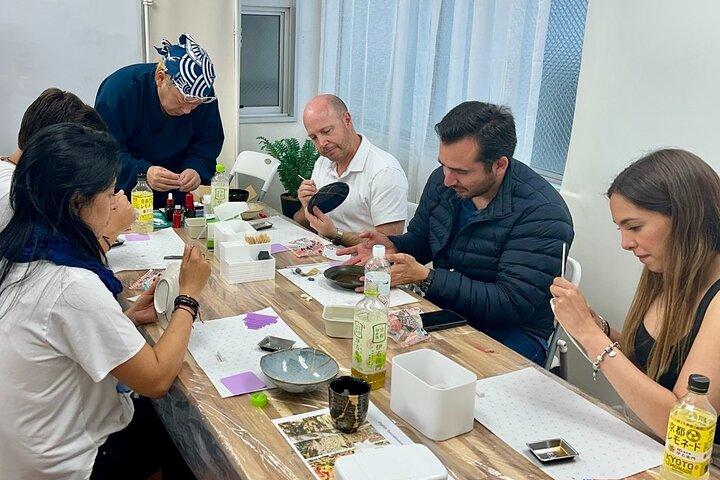
Kintsugi Workshop: Embrace Imperfections
Kintsugi Workshop: Embrace Imperfections
The workshop room is quiet and bright, with low tables laid out like operating theaters for broken ceramics—shards arranged neatly on white cloths. There’s a faint scent of lacquer and metal in the air, punctuated by the soft tap of brushes against bowls and the murmur of instructions from your teacher.
Kintsugi Workshop: Embrace Imperfections
When the workshop ends, step back into the neon of central Tokyo and ride out to Koenji for a sake-focused evening.

Sake bar KoKoN
Sake bar KoKoN
Sake bar KoKoN feels almost otherworldly, with its glass floor revealing a lit level below and sleek counter that reflects the glow of backlit bottles. The room is quiet but not stiff—soft conversation, the gentle clink of glass on wood, and the faint rustle of menus.
Sake bar KoKoN
Customize
Make This Trip Yours
4 more places to explore

Tokyo Camii Halal Market
Inside Tokyo Camii Halal Market, fluorescent lights bounce off shelves stacked with Turkish olive oil, dates, and bags of fragrant spices, creating a soft, golden haze. The air is thick with the smell of roasted nuts, dried fruit, and freshly baked flatbread, while low conversation in a mix of languages blends with the distant call to prayer from the adjoining mosque.
Try: Pick up a box of Turkish delight and a bag of mixed nuts to stash in your day bag for train rides.

Kissa Ray
Kissa Ray feels like a retro kissaten reimagined—counter seating, soft lighting, and a soundtrack that leans cool rather than nostalgic. The air smells of strong coffee, caramelized sugar from their famous pudding, and a whisper of citrus from specialty sodas.
Try: Order the pudding and a coffee; the contrast of bitter and sweet is the whole point.

Treasure Factory Style Shimokitazawa
Treasure Factory Style is bright and busy, with racks of clothing stretching across the floor and the soft clatter of hangers creating a constant background rhythm. Fluorescent lighting makes every Burberry check and Ralph Lauren logo pop, while staff move quickly, arms full of new arrivals.
Try: Head straight for the outerwear and designer sections; that’s where the best value tends to hide.

IZAKAYA RESTAURANT YAKIYASAI GINGADAN
This basement izakaya glows with warm light reflecting off bottles and polished wood, the air fragrant with grilled vegetables and rich sauces. There’s a lively hum—chopsticks tapping plates, staff calling orders, and occasional cheers over a particularly good dish.
Try: Try the asparagus and the yakisoba bolognese—both have a reputation for converting skeptics.
Before You Go
Essential Intel
Everything you need to know for a smooth trip
What is the best time to visit Tokyo for shopping and markets?
How do I get around Tokyo during my trip?
What should I pack for a winter trip to Tokyo?
Are there any cultural tips I should be aware of when visiting markets in Tokyo?
Where are the best markets for unique shopping experiences in Tokyo?
How can I keep my shopping within budget while in Tokyo?
Is it necessary to know Japanese when shopping in Tokyo?
What are some must-try foods at Tokyo's markets?
Do I need to book accommodation in advance for a December trip to Tokyo?
Are there any specific shopping districts I should focus on during my trip?
Coming Soon
Build Your Own Trip
Create your own personalized itinerary with our AI travel agent. Join the waitlist.